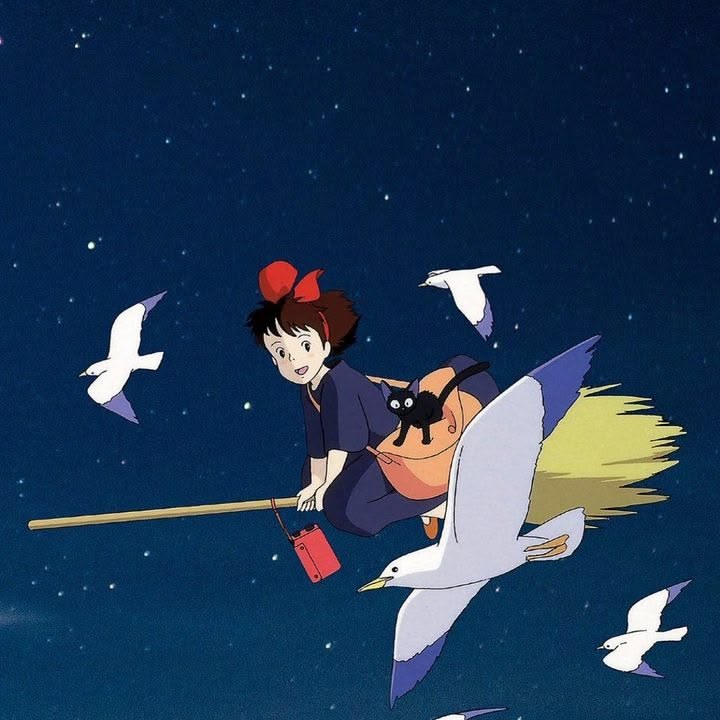
Kiki’s Delivery Service is one of my favourite Ghibli films. I remember watching it as a little girl and falling in love with the characters, the beautiful music, and the colourful seaside town. It’s one of those films I watch once a year, and it always fills my heart with a deep sense of comfort and joy. After watching it recently, I was reminded of how much wisdom this animated film holds. The simplicity of life, the goodness in others, the things that truly matter, and the ups and downs we go through no matter where we are in life. I’ve always found a deep relatability in Kiki’s character, in what she experiences and the things she discovers and explores throughout her journey in a new place.
Finding your feet in a new place. Change is inevitable in our lives, and when we’re in a new environment, there are so many things to adjust and adapt to. There are new maps we need to build in our minds, different people to interact with, local shops to discover, and a new place to become familiar with. Kiki starts off feeling like she doesn’t quite belong, but then she’s reminded that in a big city, there are all kinds of people and experiences to have.
Staying true to yourself. What I love about Kiki is that throughout the film, she always stays true to herself. She genuinely wants to help others through her delivery service. She allows herself to feel sad and lost, and despite having moments where she compares herself to other girls, she stays true to herself. There are many moments in the film where she doesn’t feel that she fits in, but ultimately, she finds people who appreciate and accept her for who she is.
When a passion becomes a job. Sometimes, when something becomes a career, we can lose the inspiration, motivation, and passion we once had. When Kiki is flying as part of her delivery service, she is faced with time pressures, customers to satisfy and a sense of responsibility. However, once she lets go of this pressure and she just flies because it’s just part of who she is, the joy for flying comes flooding back again.
It’s what’s in your heart. You’re already worthy, and you don’t need to prove it. When Kiki tries on the black dress, she feels ugly. Her mother says to her, “It’s not really important what colour your dress is. What matters is the heart inside.” The irony is that Kiki has a beautiful and charming presence, yet she feels so self-conscious of her own appearance and her abilities. At the end of the day, it’s what’s in your heart that truly matters, and what people who truly matter will see and care about.
Feeling exhausted and down. I like the part where Kiki’s friend Ursula tells Kiki to just go do some other things while she is unable to fly. It reminds me of how when we’re down, depressed, or just in a rut, it helps us to do some other things and just do anything, rather than sitting there worrying, ruminating and overthinking. I like that Kiki’s friend sees that she’s exhausted and down, and invites her to take time off work and come stay with her for a bit. Sometimes we need to take time to rest and come back with new eyes.
Failure is a normal part of life. There are so many moments we will feel like a failure in our life, and that’s totally normal. The happy moments, carefree nature or huge success stories are largely the tip of the iceberg. Most of the time, there have been hundreds of moments of failure before someone has reached that point. We all fail in life, just like a baby falls down and gets back up, failure is part of learning and growing.
There is goodness in people. One of the things I love most about Kiki’s Delivery Service is that there isn’t really a traditional villain. There is no bad person for Kiki to defeat. Instead, the challenges are largely internal. Self-doubt, loneliness, exhaustion, uncertainty and growing up. And while Kiki goes through difficult periods, she continually encounters people who want to help her, encourage her, or simply accept her for who she is.
The film reminds us that there is goodness in people. We all have the ability to be kind, compassionate, to laugh, to connect with one another and to experience joy. Perhaps that’s part of what makes Kiki’s Delivery Service so comforting. It doesn’t tell us that life will always be easy or that we’ll always know what we’re doing. It reminds us that it’s okay to feel lost, to fail, to rest, to change and to find our way again and that we don’t have to do it all alone.
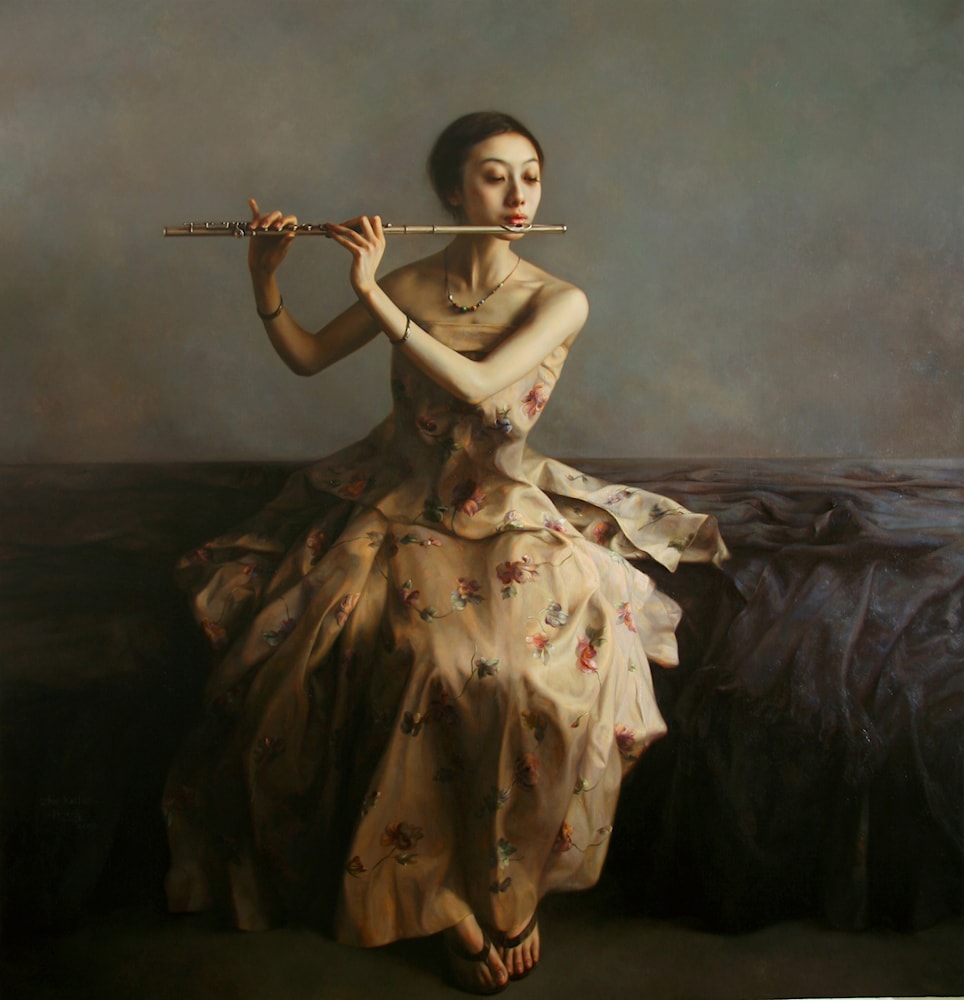
It’s fascinating to spend a significant chapter of your life completely immersed in a world, and then one day find yourself outside of it. It’s like grieving the loss of something you held dear, while also saying a bittersweet goodbye to a chapter of your life that you will always cherish. Last year, I said farewell and sold my flute, which had been with me for 15 years. I still recall the kind gentleman at the orchestral instrument store wanting to be absolutely sure I wouldn’t yearn to play it again someday. I could see a tinge of sadness in his eyes when I shared with him my musical journey.
I have avoided writing more deeply about this even in my journal because it always touches this part of my soul that unlocks so many different emotions. Music has always been my greatest companion, and on the other side, the immense pressure I gave myself became torturous in some ways. Something I think so many musicians understand is the complex, colourful and intertwined emotions that fill our inner world. There are some parts of this article that might be triggering, but perhaps relatable for those who also struggled immensely in the world of music studies.
Quiet escapism and expression. Music is a way to express yourself when you don’t have the words to express what you feel inside. It allows you to wander into a world outside of reality. The way I think of it is like watching a movie or reading a book and becoming completely immersed in that world. There is beauty in it, but also an ability to escape by putting all your focus into one thing. I didn’t particularly enjoy high school by any means, but with music, I felt like I had something to hold onto during those years. There were many reasons I wanted to go to university early, but I recall feeling like there weren’t so many opportunities at high school to further expand my music studies.
Life is filled with lessons. Yet, we can’t escape our minds, which can be both our greatest enemy and our greatest friend. I’ve found time and time again that the things we try to run away from often come back to us, or simply stay with us because the real battle is within our own minds. Although going to music school early was a wonderful accomplishment, something I am still incredibly proud of and would gladly tell others about, I can also see now that I was carrying so many emotions within myself that I was struggling to process.
Competition and favouritism. If a teacher particularly likes a certain student, they are more likely to be given opportunities to play in the school orchestra or get performances. Comparison is truly the thief of joy. There will be some teachers and classmates who criticise every aspect of your playing in the name of improvement, even though the world of art is so highly subjective in many ways. What constitutes good art can be so personal, yet it can sometimes feel as though there is a concrete standard you are constantly being measured against. Though not every teacher is this way, I am grateful for having a supportive and kind teacher during my time at the school of music.
Practice makes perfect. The pursuit of perfection is constantly prevalent in the world of classical music. It is never truly perfect. There is always room for improvement. We can repeat one small section of a piece hundreds of times just to get it right. Over time, this can make you lose the feeling of enjoyment that first drew you to music. Yet, it is often in the imperfections that music becomes so beautiful. There is something deeply human about hearing a musician make a small slip or play a wrong note, only to keep going. Those moments make the music feel real. Looking back, I wonder how much of that pursuit for perfection was pushing me forward, and how much of it was simply making me feel that I would never be enough.
True Validation comes from within. I had this dream as a child of becoming a famous musician, and with that came the desire for admiration from others and to hear the crowd applaud and affirm that I am a good musician. Despite having a genuine love for classical music, I craved validation that I wasn’t able to give myself. I was my own harshest critic. I always told myself that I could do more, that I could be more, and that if I achieved more, perhaps I would be admired. To this day, I have still kept every one of the certificates and awards I received because I am proud of those achievements, but I also see how much those accomplishments don’t define who I am as a person.
We are already worthy as we are because we exist. Looking back, I realise that the person I needed that love and acceptance from most was myself. I also remember the painful feeling I would get whenever someone asked, “Why did you give up playing?” or “Why did you drop out?” Of course, those questions were usually asked out of genuine curiosity, but they carried something much heavier for me. I had become accustomed to the respect and admiration that came with studying music. The flipside of that was that giving it up brought feelings of failure, of having given up, and of disappointing others.
Burnout, pressure and loss of passion. The first time I self-harmed and saw a counsellor was during my first year of university. I was 16 when I went to university, and when I think about that now, I realise just how young I still was. In many ways, I was still a baby. There was an isolation I had never felt before. Despite growing up on a farm, where I spent lots of time alone, I somehow felt even more isolated living in the city. There was the pressure I placed on myself, the burning desire to be successful, whatever that meant, and the constant reminder that I needed to practise for as many hours as possible. I would stand in a little box of a practice room, practising for hours, with the dream of becoming a performer.
I was so focused on becoming the person I thought I needed to be that I didn’t realise how much I was struggling simply to be the person I already was. There was this voice that I so needed to tell myself, which was, you’re already enough. We often put the most pressure on ourselves, because we’re the ones living our life. The high expectations I put on myself made me lose the enjoyment I once had in playing the flute. Because, in many ways, I felt like a failure when I didn’t achieve the grade I hoped for, or when I didn’t get the opportunity I worked for. Classical musicians spend an enormous amount of time and energy on practice, and I began to question whether I wanted to spend all my time doing this.
The harsh reality. The truth is that the dream of being a performer quickly turned into the reality that there are limited opportunities and money to be made as a musician. Becoming a top performer who earns a good income is a reality for only a small percentage of musicians. Many musicians eventually become teachers, perform part-time, or move into other industries and areas after completing their studies. I admire the determination, hard work and ambition I had as a child. I admire that I had a dream and was willing to work incredibly hard towards it. But as I continued studying music, I began to sense just how much of my entire world would need to be devoted to it if I wanted to pursue it seriously. And while I loved music deeply, there were other parts of life I was curious about and other things I wanted to explore.
What life do you truly want to live? Over the years, I have often found myself thinking about what I truly want from life. Lately, I’ve been thinking about the concept of the death of ambition. We don’t need to chase status or money simply for the sake of having more. To be happy, healthy, and content is enough. We will all die someday, and so why not live to enjoy it? I say this because I’ve been having this tormenting thought lately about the pressure of doing more, yet we have to quiet the external noise and listen to what we truly want in our hearts. No one gets to dictate what a good life looks like except ourselves.
We are constantly surrounded by messages telling us what success is supposed to look like, whether that’s more money, more recognition, more achievement, more status. If you really dig deep (but also not that deeply), a lot of those messages are made to make us more miserable. Because when I think about what matters when I’m old and grey, it’s not going to be those things society says are important. And somewhere along the way, many of us can become so consumed by the pursuit of these things that we forget to ask whether they are actually making us happy. Perhaps the death of ambition isn’t really the death of wanting anything at all. Perhaps it is the death of needing to prove that we are enough.
We will always need art. One thing I remember feeling in high school was how much science, mathematics and sports were valued, while subjects such as English, art, music and history often felt less valued by comparison. When we leave school, we can see echoes of this in our daily lives and in society more broadly. Yet the arts are deeply ingrained in our culture and are an essential part of our lives. They help shape how we understand ourselves and the world around us. They are not something separate from who we are. They are woven into us, and in some form, they exist within each and every one of us.
Although I stopped playing the flute many years ago, saying farewell, au revoir and goodbye to the flute was never truly saying goodbye to music. Music always stays with us no matter where we go. It’s the living, breathing part of our everyday lives. It’s the sounds we hear in nature, the birds singing in the early hours of the morning or the music we blast through our headphones. It’s the songs we sing out loud, the memories that bring us nostalgia, warmth and joy, and the greater meaning it brings into our lives.
“Every child is an artist. The problem is how to remain an artist once he grows up.” — Pablo Picasso
Living in central Auckland is something I never thought I’d experience. In many ways, it’s a big little city where you can step outside and still feel like you have your own space. It’s a short walk to the ocean, and instead of acres of greenery surrounding you, there is a concrete jungle of buildings everywhere. Although I only spent a month briefly living in the city, it was a nice glimpse of city life in New Zealand.
Everything within walking distance. Oh, convenience is a wonderful thing. Being able to walk to the nearby supermarket, walk to work, go to the park, catch the bus and sit at a cafe without travelling far was a pleasant experience.
Delicious food nearby. There were so many delicious food options. The stomach is happy, but the wallet not so much haha. Eden Noodles was a regular spot I’d drop by, and their kumara noodles are so delicious.
Random outdoor noises. Sometimes there’s random shouting in the distance, the sound of laughter and drunken conversations. There’s the sound of rumbling cars playing some loud music, construction on the street, or the sound of an ambulance.
The Scooter life. I know people love riding scooters, but I really noticed them much more while living in the city centre. They truly are everywhere. There were also lots of food delivery riders around the streets.
People who walk slowly and people who walk fast. And people who walk on the right side, and people who walk on the left. There are no strict rules when it comes to walking in the city.
Beautiful violin playing outside the supermarket. One evening there was someone playing Salut d’Amour, and it was so beautiful. I love hearing beautiful classical music played out loud while you’re just wandering around.
The peaceful space of living alone, wishing you had a pet cat. There was something wonderful about being surrounded by people, but going home and feeling complete solitude. It does make you wish there was a purring cat lying on your stomach though.
A longing for nature and the sound of birds. After a month, I still felt this deep longing for nature and the peace and quiet of suburban life. It was a good experience to have, and there are a lot of perks to living in the city but me and citylife were not meant to be.
Lately, I’ve been reorganising my online world and limiting or restricting what I’m seeing. So much of what we view online is designed to stir an emotional response within us, to keep us engaged. The world feels as if it’s changing so fast, yet the only way to slow down is within ourselves. Our society has created an environment that avoids boredom by chasing entertainment and constantly robbing our attention. I’ve been reflecting on how I want to live a simple life.
Observing. During a visit to China, I was pleasantly amused by the size of the ants. They were the biggest ants I’ve ever seen in my life. Several times, I’d crouch down to stare at the ants walking around carrying big loads to their nest. It reminded me of the childlike curiosity we have within all of us, where we could spend hours doing a task and time would just go by. Where the little things would make us burst out laughing. We were truly in the moment.
Reading. Reading slows down the mind. It makes you reflect and think critically about certain things. It reminds me of how we used to all watch the same show on TV or watch the news at the same time, instead of constantly changing the channel or having decision fatigue about what to watch on Netflix. Reading a book is just that. The only task is to read the book without numerous tabs in our browser.
Notifications. Everyone is accessible, but what once was a way to instantly interact with one another has now become a constant door-knock. Messages can take time and energy, and notifications create a daily interruption. I’ve found switching off notifications, deleting apps and making my phone as simple as possible has helped.
Phones. Our phones are a constant source of information and entertainment, ready to hit us with dopamine and make us addicted. We’re all addicted to our phones. The art of daydreaming seems to be less prevalent, and we live in a society that seems to spend more time looking down. I think there is beauty in being bored, yet sometimes I feel I’m being sucked into the vortex. It feels like we’re already living in some kind of Matrix.
Environment. Our environment impacts us in many ways. A quiet, peaceful and warm environment makes us feel safe. Being surrounded by nature gives us the time to just observe and slow down. Yet, being in a fast-paced environment might cause us to feel like we need to be constantly doing something. When we slow down and have time to do nothing and just be, it’s when we can fully relax and not think too much about anything.
I noticed when I allow myself to be bored, rather than turning towards a distraction to escape my mind, the anxiety and racing thoughts seem to slow down, the space to rest and reflect and be in the present comes to the surface. Most of the things I worry about never happen, and for a moment I’m reminded that life is often simpler than my mind makes it seem.
We are the author of our own journey, the painter of our own beautiful artwork and the composer of our own symphony. The internal voices that tell us we’re unlovable often begin in childhood. We can change the narrative and not let those words and voices deeply internalised within define us. Deeply loving oneself isn’t a selfish act, but a necessary human behaviour that we all need to survive. Loving yourself is the same as breathing. You need it to stay alive. When we don’t love ourselves, life often becomes sad, painful and full of torment.
Letting go of self-criticism. Those voices come and go like waves in the ocean or passing clouds in the sky. They are fleeting, yet in those moments when they’re there, they can feel real. The biggest demon is the one within. If we believed there was always a storm outside, we might forever stay inside the house and never step outside to feel the warmth of the sun. Self-criticism is like poison in our hearts, making us feel down and hopeless. Those voices aren’t true, and your feelings aren’t facts. You are a radiant soul who deserves to be spoken with words of love, compassion and kindness, the same way a mother gently speaks to her baby.
Changing the narrative. We can adjust and change the beliefs we have and the wiring of our brains. Those patterns don’t need to dictate our lives, and just because something happened in the past doesn’t mean it needs to exist in the present. You can rewrite your story, you can choose to do things differently, and shift the mindset that may have been restricting and limiting you. We can all speak to ourselves more the way we’d speak to a good friend, with encouragement, positivity, confidence, and faith.
Self-soothing your body. Trauma often shows up in the body. Moments of tension, shaking, crying, and fear can erupt in the body, even if you’re in no danger. It can take time for the body to feel safe. Our body needs love, comfort and self-soothing. You can give yourself a warm hug, massage your arms, lie down in a comfortable position, or practice self-havening, butterfly hugs, gentle tapping, taking a warm bath, listening to calming music, dancing freely or anything that allows your body to feel safe, relaxed and calm.
A true friend is a rare diamond. My sweet friend inspired me to write this article, as through the hard chapters of life (as we all have them), they have been encouraging and reminding me that what truly matters is to love ourselves, and remember that we deserve happiness. A true friend will be honest, loving, compassionate, caring and thoughtful. They genuinely want to understand you. The people we surround ourselves with are incredibly important. Surrounding ourselves with loving friends is one of the greatest gifts we can give ourselves.
Embracing your heart. We are imperfect humans. We cry, we laugh, we feel everything from the moon to the sun. You are a worthy human being, just as you are. Forgive yourself and others, whatever it might be. You’re exactly who you’re meant to be and where you’re meant to be in this moment in time. Everything that has led to this moment has happened for a reason, and there are many lessons for us to learn from. These moments help us grow wiser, stronger, more resilient, kinder and more loving and accepting.
Practising self-compassion. Every morning when you look in the mirror, remind yourself how beautiful you are. It can be hard at the start, but the more you do it, the more that feeling of lightness and confidence injects into your spirit, and you start to believe it more and more each day. The voices we have in our minds can become increasingly replaced with loving affirmations and words of truth.
You deserve to be happy. Do more of what you enjoy. Do the things that give you joy. Do the things that make you laugh. Life is unpredictable, and tomorrow isn’t guaranteed. We only have so much time in this life, and the moments spent crying in despair will keep us trapped in hell. Notice the small things, embrace the little moments, and have gratitude for everything. You deserve to feel peace, you deserve to be happy, you deserve to feel calm, you deserve to feel safe, you deserve it all.
Feeling the world deeply around you, having high sensitivity and being a gentle soul is one of your greatest strengths. We need more softness in this world, more grace, compassion, forgiveness, and peace. I’ve recently read the book Highly Sensitive People in an Insensitive World by Ilse Sand. Not all highly sensitive people are softspoken, yet there seems to be a connection between sensitivity and gentleness. While we live in a world that may not always accommodate highly sensitive people, there are ways for one to find strength and freedom in embracing your own softness.
Compassion for the little creatures. I find a lot of people who are soft have a deep love for animals. This is one of the greatest strengths to have, because compassion for other living beings is a sign of deep care and connection to the world. It’s a reminder that we are all connected in this world with all living beings, and we share this planet together. Appreciating and respecting the creatures we share this planet with encourages curiosity and kindness. When we try to put ourselves in their shoes, we to try to understand how they might be feeling.
Embracing your weirdness. For a long time, I believed that being soft or having a gentle voice was a flaw. I thought I would be more accepted if I wasn’t so soft, however, personality isn’t permanent. Sometimes you want to laugh loudly and sometimes you want to spend time alone quietly. We are constantly shifting, changing and no one can be fully defined. Your gut will always tell you the truth, and you can always feel when you’re really staying true to yourself or not. Embrace those parts of you that are a bit weird, and embrace the courage to be disliked.
Finding strength in your inner world. A colourful world runs within. It makes me think of a vast lake, where there is a hidden castle ruin deeply below the waters. The water glistens on the surface, and there is a beautiful world below with fishes swimming around, magnificent buildings and intricate sculptures. We all hold strength within ourselves greater than we know. Quiet strength is rooted in unwavering confidence and hope within oneself, acceptance of the things one cannot change and openness to wisdom and learning.
Long walks in nature. Highly sensitive people can experience sensory overload, emotional overwhelm and fatigue from absorbing others emotions. After walking in nature, I always feel a sense of renewed strength. I can face the day with a deeper sense of gratitude, a stronger connection with myself and others, and a greater sense of presence. Being in nature allows us to reflect, take one step at a time and enjoy the small things like listening to birdsong, the sound of the wind and breathing in the fresh air. It helps us to think freely and walk our worries away.
Finding creative expressions. When I feel low, it can sometimes feel like the ocean is crashing down and I feel it so deeply. When I feel content, it can feel pleasant and like the sun warmly shining inside. During intense periods, having a creative outlet, like dancing, writing, running, painting, playing an instrument or cooking can help pour those emotions somewhere safe. Self expression helps you stay present, reflect, reduce overwhelm, and spark new ideas.
Being mindful of others. When your nervous system is sensitive to internal and external stimuli, you notice those subtle moments where someone’s emotions shift, or how they might receive something. That sensitivity and mindfulness is important in building trust and empathy. Picking up details in one’s body language, eyes, tone and moments of hesitation, can help with determining what might be appropriate to say to the person.
Overcoming difficult periods. Be gentle with your heart. We all must overcome difficult things in life. Approaching those moments with softness, being calm and honest with oneself and building quiet resilience is like building a road gradually brick by brick, rather than trying to pave the path in a day and ending up with potholes. Speaking to yourself with gentleness like you would to a child is deeply healing. While we all need a little bit of tough love from time to time, we also need that gentle voice to guide, reassure and nurture us to be strong and grounded within.
Protect your energy. For those with high sensitivity, it’s easy to become drained in certain situations. I’ve experienced periods of feeling run down from work, constant interactions with negative people, and spending time in overstimulating environments. Learning to say no is incredibly powerful. Directing your energy to things that make you feel a sense of peace, rejuvenation and sparks your creativity is so important. Spending time alone allows you to recharge your batteries, and invest your energy in places that truly matter.
Deep meaningful connections. Surround yourself with calm, positive, supportive and uplifting people. Those who embrace your softness as a strength, and give you the space to be yourself. I was recently chatting with a friend who was sharing with me about the book they read called The Good Life by Robert Waldinger, which discusses one of the longest-running studies on happiness, health, and human well-being. Ultimately, the most important thing we have of all is the relationship we have with one another.
The healing power of music. Music calms the nervous system, releases tension, and expands our inner world. For many HSP, we feel the music resonate in our inner world playing on full volume within our hearts. My lovely piano friend recently shared this beautiful piano music with me. It evoked a lot of emotions within and felt like the music understood something within my soul that words can’t explain. I think many of us relate to this feeling. It’s why we listen to music, because it has a magical power of healing something within us.
Growing up we would go to the beach each year on Christmas day. In New Zealand, Christmas is celebrated during the summertime, so instead of spending it in the snow, you spend it in the sand and sea. The holidays remind me of the smell of the ocean, eating fish and chips, reading on the farm and walking in the bush. The saying ‘don’t forget your roots’ makes me think of the Classic Kiwi song Don’t Forget Your Roots by SIX60. The song reminds us to remember where we come from. It’s made me reflect on the importance of embracing my own cultural roots and staying true to myself.
For many Asians growing up in Western countries, fitting in meant minimising aspects of their Asian culture to better assimilate and navigate society. One aspect of this is language. Language connects us to others, helps build relationships, and shapes how we understand the world. It’s natural to speak the dominant language in our environment. However, I often felt like there was something missing. Having a deeper connection with our culture unlocks something within the soul. Learning the language and connecting with others in our mother tongue brings a sense of knowing of oneself, knowing of others and respect and appreciation for one’s culture.
Asians who have grown up in a Western country are often described as a banana (yellow on the outside and white on the inside). When I think about it now there’s a tinge of sadness behind the humour. Because although it’s said as a joke, it implies that we are not ‘Asian enough’ or to put it more bluntly, we’re whitewashed. That terminology can bring feelings of shame. We should embrace our cultural roots no matter which society we live in. When something is perceived as different, it can seem strange to others. However, embracing those differences can help us see that we’re more alike than we are different.
As a child, the sweet aroma of garlic, ginger and spices would waft through the house. The food that my parents cooked is a fond memory. They were and are such wonderful cooks. I can’t help laugh when remembering taking a red bean bun to school, opening my lunch box, and seeing my classmate’s eyes widen with curiosity and slight hesitation due to the smell. How delicious those buns were! Making dumplings, carefully filling and folding them, eating Zongzi (粽子) during Dragon Boat Festival and Tang Yuan (湯圓) during Lantern Festival were warm memories. Food always brought everyone together.
The home was filled with Taiwanese and Chinese culture and only Mandarin was spoken but as soon as I stepped outside, the world was Western. This often left me feeling not Asian enough and not Kiwi enough. It’s difficult to describe this feeling except that it can feel like an identity crisis. The environment we grow up in shapes our thinking and beliefs. Western culture often emphasizes individualism, while Asian culture values collectivism. Sometimes, Eastern and Western ideas conflict, but what is most important is having your own values.
It’s important to recognize that deep trauma can sometimes cause people to distance themselves from their own culture. Sometimes it can even be the seemingly small comments that people make, that one can remember for a lifetime. Sometimes it’s the feeling of rejection that can cut like a knife and cause a lot of pain. Sometimes it’s their own upbringing and sadly there are aspects of every culture where there are beliefs or ways of doing things that aren’t healthy. Everyone’s experiences are different.
When we speak our mother tongue, we open up our world to deeper connections. Reconnecting could be finding aspects of the culture that resonate with you and integrating them into your life that feels meaningful to you. We can reconnect through people, food, festivals, music, film and tv, books and art. When we don’t forget our roots, we have a better understanding of who we are, where we come from and what values shape us. We have a sense of belonging and we expand our world by embracing the richness of our heritage. Remembering our roots also helps us preserve our language, culture and traditions for future generations.
I recently watched Joika a film based on a true story of Joy Womack, one of the first American woman to graduate from the Bolshoi Ballet. She goes through the gruelling process of extreme competitiveness, intense pressure and the need for mental resilience in the ballet world where perfection is often strived for. Beneath the pressures, and challenges, is a deep passion for dance. Comparison is inevitable in the art world, in most worlds to be fair, but most prevalent in the art world where perception of what is good is often subjective.
Comparing oneself to others or specific situations often leads to immediate dissatisfaction. When we compare with others it can lead to feelings of inadequacy. However, when we compare with ourselves, and focus on making progress within ourselves, it can be true motivator. There are times where the first can motivate us, when we see someone doing well in a certain area it might give us an extra push to go for what we’ve always wanted to. However, constant comparison can lead us astray from our own path. It makes us focus on others rather than ourselves.
Everyone is walking on their own journey in life, and they face their own challenges behind closed doors. We just don’t get to see those parts, because they tend to lie beneath the tip of the iceberg. Things are not always what they appear, and what looks desirable on the surface may have endured many struggles. Comparing yourself to who you were yesterday, admiring qualities in others that you would also like to adopt and practicing gratitude for what you already have helps in recognising that even through the pursuit of change and grow, you’re already enough.
In the film Begin Again, Keira Knightley’s character says, “Music is about ears not eyes.” It’s a simple reminder that music is meant to be felt and experienced. Just as we shouldn’t judge a book by its cover, we should value music for its story telling. Some of today’s music is incredibly catchy and I enjoy listening to some of them. But sometimes it seems like the music industry is only interested in getting as many people to listen or watch a video, rather than carry something of emotional resonance or share an important message. It makes me appreciate the timelessness of classical music, how it lingers long after the final note.
Recently, I went to listen to La Bohème live at the theatre. It was such an amazing experience sitting there with the audience sharing this collective experience. Despite the beautiful costume and set design, it was the singing that deeply moved me. Sometimes I wonder how we would hear the music as an audience, if each person closed their eyes. Of course, some performances like musicals, ballets, and operas are inherently visual. But so much of today’s mainstream music, though not all, feels like it’s lost some of its depth, relying more on image than substance.
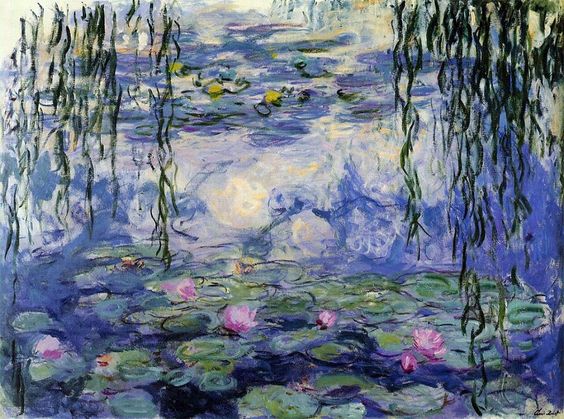
Listening, really listening, is something magical in itself. The silence in music is just as important as the sounds themselves. When we sit in the audience to listen to an orchestra or a band, and really listen, the music touches us all in different ways. It’s such a wonderful way of bringing people together through an experience that everyone can understand. Music is truly a universal language. In the similar experience of art, staring at a Monet piece makes me think of Debussy’s music. When we look at art or listen to music, we feel something. When eyes do matter, it is only through presentation and stage presence. Music asks us to be still, to be present, to listen and above all, to feel.
Living with less means creating space for the important aspects of our lives that bring greater value. We are increasingly encouraged to consume more in a tech-saturated environment, where the rise of targeted advertising is driving growth in our spending. The emphasis on needing more things in our lives to feel a sense of satisfaction leaves many of us unfulfilled. When we let go of the need to fit in, we can feel a greater sense of freedom. When we have gratitude for all that we have, we can look around and realise that we don’t need a lot in life to be happy.
Spend time with those you cherish. Friendships are quality over quantity. A person’s worth is not determined by how many people they surround themselves with. Spending time with those that we love means investing in a deeper connection with others. Living with less isn’t contained only to our material possessions but also in the relationships that we have. It means putting up healthy boundaries with people and spending one’s time and energy with the people they love the most.
Save money and time from spending less. How do you spend your time? Perhaps you like learning new things such as a new language or joining a sports team. The more we spend our attention on the hobbies we enjoy, the more we save time on the things we don’t. We can save money from unread magazine subscriptions or unfinished courses. By picking up a few interests to focus on, you can spend your money and time more wisely. We don’t buy unnecessary materials that may take up more space in our homes or have a list of unnecessary tasks that fill up our schedule.
Practice Digital Minimalism. Digital Minimalism is a term popularised by computer scientist and author, Cal Newport, who doesn’t use social media. It describes the philosophy of technology use in which the time spent online is cut down to a small number of carefully selected activities that support things you value, and then you can happily miss out on the rest of the online world. By leaving behind unimportant acts of social media, we reclaim time and we are more mindful of being in the present.
Embrace your own Personal style. The fashion industry seems to move faster than we can keep up, with changing trends and seasons. Personal style, on the other hand, never goes out of style. Are there certain styles or pieces of clothing that you always wear year after year? When we embrace our own personal style, we save time from browsing the never-ending rows of shops and save money from buying clothes that may only be worn a few times.
A minimalist lifestyle can nourish you. The accumulation of stuff and social obligations in our lives can create more added stress. Minimalism gives you more space to live your life and be in charge of your space, schedule and mind. When a home is decluttered, it creates balance and peace in our mind. Living a more simple life means embracing deep connections, purpose in one’s work, and spending time and energy on the people and activities that you love the most.

 In the film Begin Again, Keira Knightley’s character says, “Music is about ears not eyes.” It’s a simple reminder that music is meant to be felt and experienced. Just as we shouldn’t judge a book by its cover, we should value music for its story telling. Some of today’s music is incredibly catchy and I enjoy listening to some of them. But sometimes it seems like the music industry is only interested in getting as many people to listen or watch a video, rather than carry something of emotional resonance or share an important message. It makes me appreciate the timelessness of classical music, how it lingers long after the final note.
 Tien-Jen